Suspension repair near Lolo: signs your shocks, struts or steering are worn
In brief
Bouncing after bumps, clunks over rough road, a vehicle that wanders or pulls, nose-diving when you brake, and uneven tire wear are the usual signs of worn suspension or steering parts. Around Lolo, gravel roads and frost heaves speed that wear up.
The usual signs you need suspension repair are easy to feel once you know them: the vehicle bounces after a bump instead of settling, you hear clunks over rough road, the steering feels loose or wanders, the nose dives when you brake, or your tires wear unevenly. For Lolo drivers, gravel roads, washboard and spring frost heaves wear shocks, struts and steering parts faster than smooth pavement does. Worn suspension isn't just a comfort issue. It changes how the vehicle stops and steers.
Here's what wears out, why, and what to watch for.
What does the suspension actually do?
Your suspension has two jobs: keep the tires pressed against the road, and keep the body of the vehicle under control over bumps, in turns and under braking.
Springs hold the vehicle up. Shocks and struts control how fast the springs compress and rebound, so the vehicle settles after a bump instead of bouncing. Control arms, bushings and ball joints hold the wheels in position. Tie rod ends connect the steering to the wheels.
When any of those wear, the tire spends less time firmly on the road, and you have a little less grip and a little less control.
How do rough roads wear out suspension parts?
Every pothole and sharp edge pushes the suspension hard. Over time, the seals and valves inside shocks and struts wear, and they stop controlling the bounce the way they used to.
Gravel and washboard add constant vibration, which works on bushings, ball joints and tie rod ends. Dirt and water get past the rubber boots that protect ball joints and tie rods, and once grit is inside, wear speeds up.
Montana winters add their own wear. Freeze and thaw cycles harden and crack rubber bushings, and winter moisture and road treatments promote rust on metal parts.
If you live off a gravel road around Lolo, or your commute includes rough stretches, expect suspension parts to wear faster than the "typical" numbers you see online.
What are the signs of worn suspension?
Bouncing. The vehicle keeps bouncing after a bump or a dip instead of settling once.
Nose-dive and squat. The front end dips hard when you brake, or the rear squats when you accelerate.
Body roll. The vehicle leans or sways more than it used to in turns or on curvy roads.
Clunks and rattles. Knocking over bumps or when turning often points to worn bushings, ball joints, sway bar links or loose hardware.
Loose or wandering steering. You're making small corrections to keep it straight, or there's play in the steering wheel.
Pulling. The vehicle drifts to one side on a straight, flat road.
Uneven tire wear. Cupping (a scalloped pattern on the tread) or wear on one edge of the tire.
Leaking shocks or struts. An oily film on the shock or strut body is a sign it's losing fluid.
Pro tip: Run your hand across the tread of each tire. If it feels wavy or scalloped, that's cupping, and it usually means the shocks or struts aren't keeping the tire on the road.
Can worn suspension affect steering and braking?
Yes, and this is the part people underestimate.
Worn ball joints and tie rod ends make steering imprecise, and they can throw off the wheel angles so the vehicle pulls and the tires wear fast. A ball joint that's badly worn can separate, and if that happens the wheel can lose its connection to the suspension. That's why we take a clunking front end seriously.
Worn shocks and struts affect braking too. When they can't control the weight shifting forward as you stop, the front end dives, the rear gets light, and the vehicle takes longer to settle and stop. On a gravel road or a slick winter morning, that matters.
Safety first: If you hear a loud clunk from the front end and the steering suddenly feels different, get it checked before you drive any distance.
Which suspension parts wear out first on rural roads?
On vehicles that see a lot of gravel and rough pavement, the parts we'd expect to wear first are shocks and struts, control arm bushings, ball joints, tie rod ends and sway bar links. Trucks and SUVs that carry loads or tow put extra wear on all of it.
Wheel bearings can also take a beating on rough roads. A humming or growling noise that changes with speed, and gets louder in a turn, can point to a bearing.
How we handle suspension and steering repair
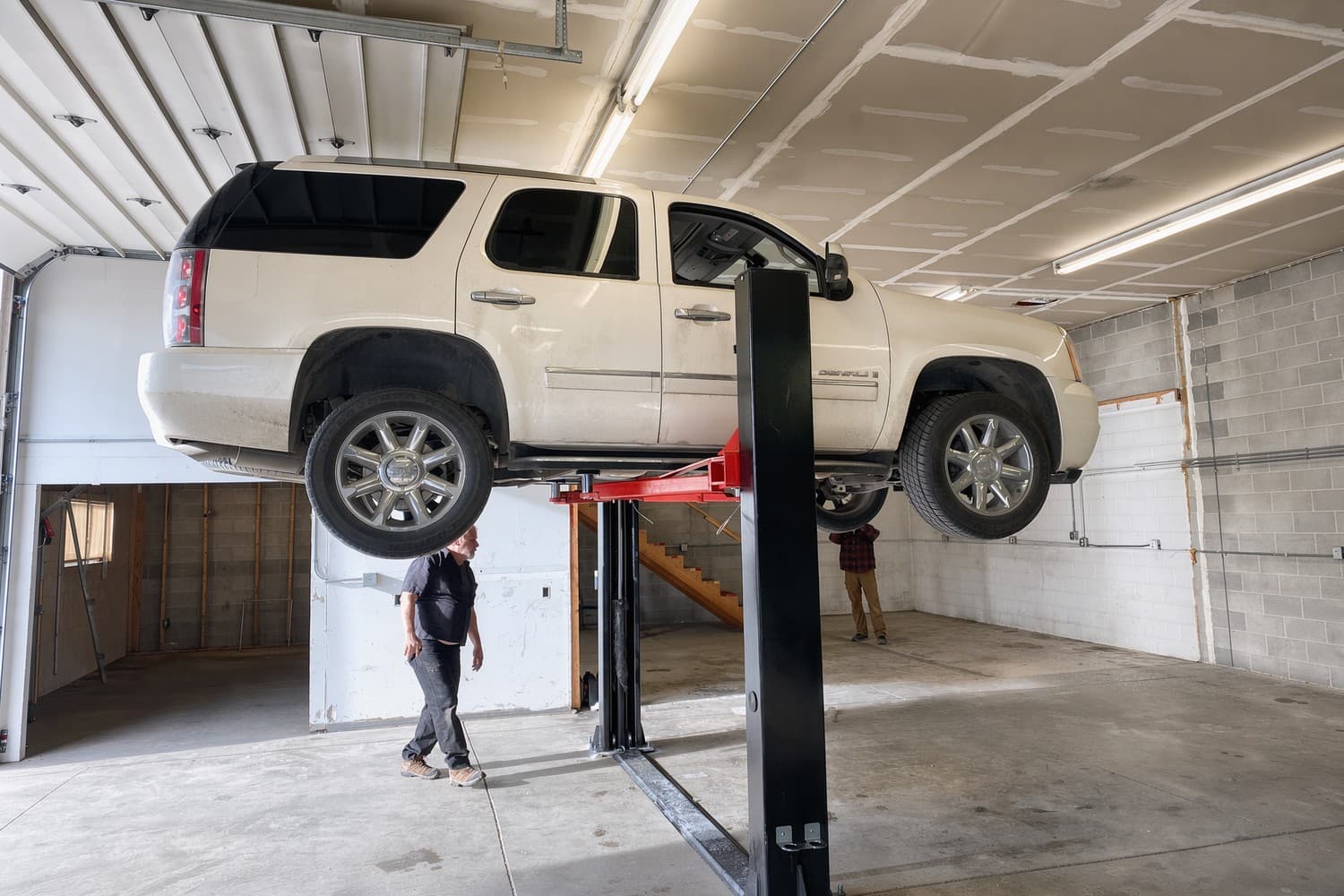
Our suspension & steering work starts with tracking down the worn parts before we talk about a repair. That means getting the vehicle up on the lift and checking the shocks or struts, the ball joints, tie rod ends, bushings and links, so the repair fixes the noise or the handling problem you came in with.
You get the cost before any work starts, and you hear what needs doing now and what can wait. Repairs we do carry a 12-month, 12,000-mile warranty, whichever comes first, and an ASE Master Technician is on every job. If you're coming from Lolo, our shop on the west side of Missoula is a quick drive up US-93.
Frequently Asked Questions
How do I know if I need new shocks or struts?
Watch for bouncing after bumps, nose-diving when you brake, leaning in turns, cupped tire wear, or fluid leaking from the shock or strut. Any one of those is a reason to have them looked at.
Is it safe to drive with a clunking front end?
A clunk means something is loose or worn, and you can't tell how serious it is by sound alone. A worn ball joint can fail, so have it checked soon, and sooner if the steering feels different.
Do gravel roads really wear out suspension faster?
Yes. Constant vibration, impacts and dirt getting into rubber boots all speed up wear on shocks, struts, bushings, ball joints and tie rod ends compared with smooth pavement.
Should I replace shocks or struts in pairs?
Usually, yes. Replacing both on the same axle keeps the vehicle handling evenly side to side. We'll tell you what we find on each side.


