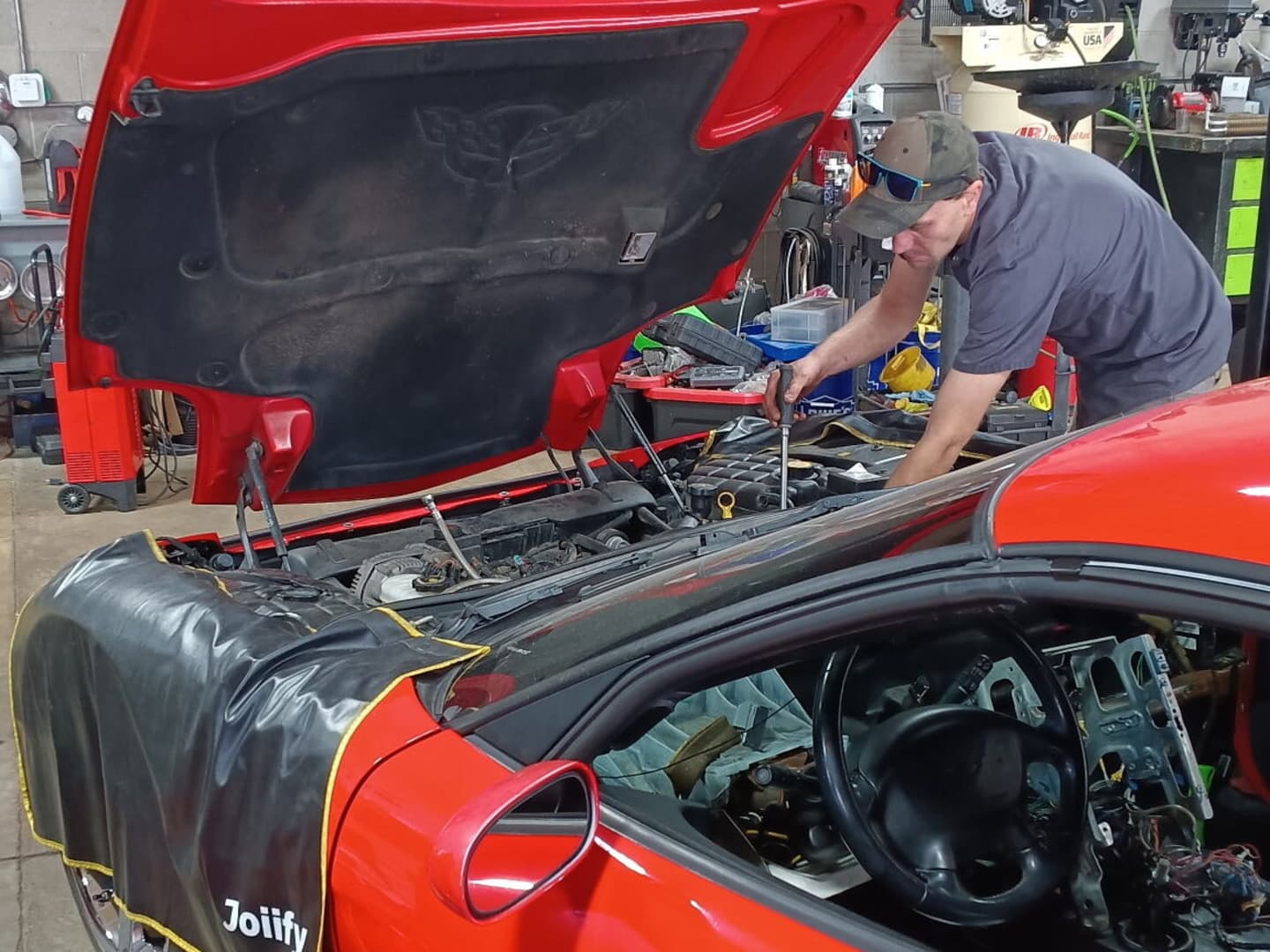
Engine repair covers finding and fixing problems that affect how your engine runs, from a misfire or a vacuum leak to a failed gasket or worn timing components. Some jobs are small, like replacing a bad sensor or an ignition coil. Others mean taking part of the engine apart. Either way, it starts with knowing exactly what's wrong.
Engines usually give some warning before a small problem becomes a big one. A check engine light, a rough or shaky idle, hesitation when you step on the gas, or less power than usual on a climb. Other signs you can hear or see: ticking or knocking, oil spots under the vehicle, bluish smoke from burning oil, or white smoke with a sweet smell, which can mean coolant is getting into the engine. Worse fuel mileage than normal can be an early clue too.
Some warnings mean act now. A flashing check engine light usually means a misfire bad enough to damage the catalytic converter, so keep driving to a minimum until it's checked. The oil pressure light or a temperature gauge heading toward hot are more serious: pull over and shut the engine off as soon as it's safe. Running an engine low on oil or overheated can turn a manageable repair into a major one.
A check engine code is a starting point, not an answer. It tells us which system or circuit flagged a problem, not which part failed. A misfire code, for example, could trace back to a spark plug, an ignition coil, a fuel injector, a vacuum leak or low compression. We test to narrow it down before replacing anything, so you aren't paying for parts that didn't fix it.
Around Missoula, mountain grades, towing, long highway stretches and harsh winters all keep an engine working hard. Heavy loads, long climbs and cold starts add wear over time, which is a big reason regular oil changes and maintenance matter so much for engine life.
Once we know what's going on, we explain it in plain terms, lay out your options and give you the cost before any work starts. If the repair can wait a bit, we'll say so. If it can't, we'll tell you why.