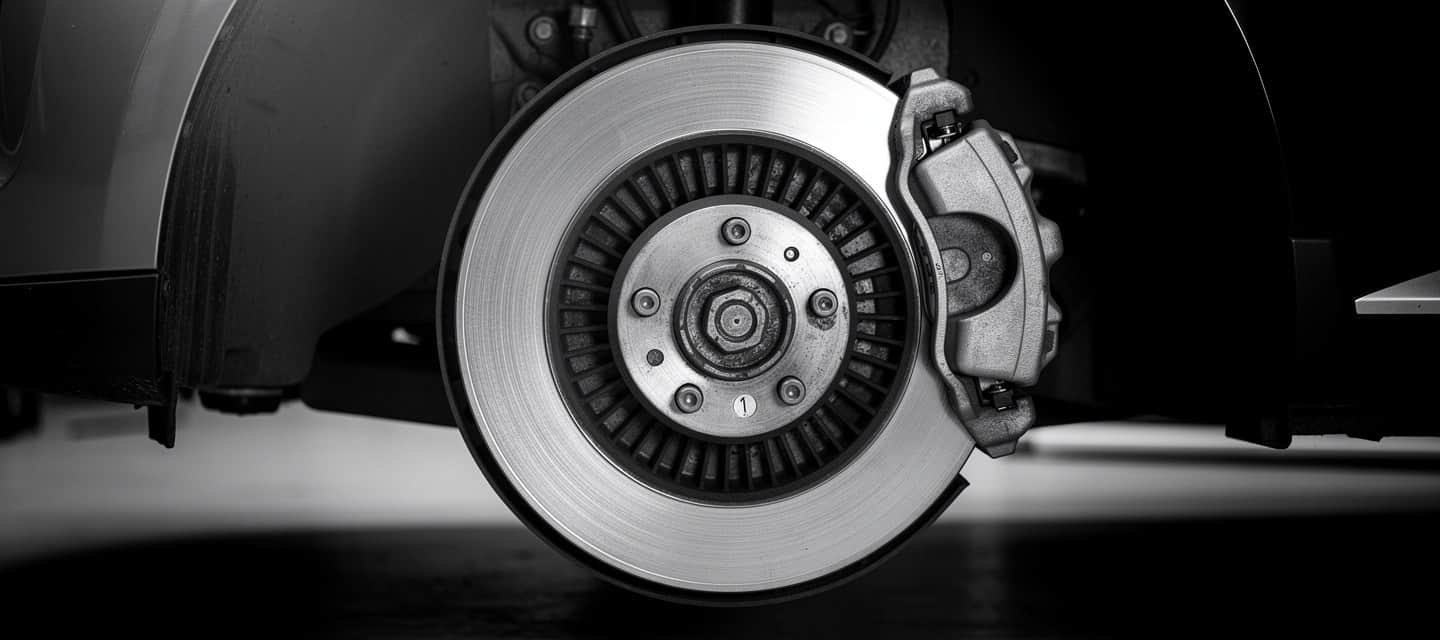
Brake repair covers the parts that stop your vehicle: pads and rotors, or shoes and drums on some rear brakes, plus calipers, brake lines and hoses, the master cylinder and the brake fluid that ties it all together. Most brake work starts with worn pads, but a good inspection looks at the whole system, because a sticking caliper or old fluid can cause problems new pads won't fix.
Some brake warning signs shouldn't be ignored. Squealing or squeaking can come from the wear indicator many pads have, which squeals when they're getting thin. Grinding usually means the pad material is gone and it's metal on metal. Don't keep driving on it, because it damages the rotors and makes stopping less reliable.
A soft or spongy pedal can mean air in the lines, low fluid or a failing master cylinder, so get it checked promptly. A pulsing pedal or a shaking steering wheel when you brake is usually a sign the rotors are worn unevenly. Pulling to one side can point to a sticking caliper, a brake hose problem or uneven pad wear. And a brake or ABS warning light means the system has picked up something that needs a look.
Driving around here is hard on brakes. Long mountain descents build a lot of heat in the brakes, and stop-and-go traffic keeps them working constantly. Both wear pads and rotors out sooner than easy highway miles. Towing, hauling and loaded work trucks add even more. On long grades, using a lower gear lets the engine help slow you down and keeps the brakes from overheating.
Brake fluid matters too. It absorbs moisture over time, which lowers its boiling point and can lead to corrosion inside the system. Your owner's manual is the place to start for how often to change it, and we can check its condition when we inspect your brakes.
When you bring it in, we start with an inspection: pad and shoe wear, rotor and drum condition, calipers, hoses and lines, and fluid level and condition, plus a test drive when it's needed. Then we tell you what we found, what needs attention now, what can wait and what it costs. No work starts until you've okayed it.
We do brake work on cars, trucks, SUVs and fleet vehicles here in Missoula.
If your brakes are grinding, or the pedal feels soft or sinks closer to the floor than it should, call us before driving much further. For anything else, call or request an appointment online. If another shop has quoted you a brake job, bring it in and we'll give you a free second opinion.